Become a professional diver
Train to become a professional civil diver at our own diving training centre on the Markermeer — combining online self-study, hands-on practice in Enkhuizen and accredited registration.
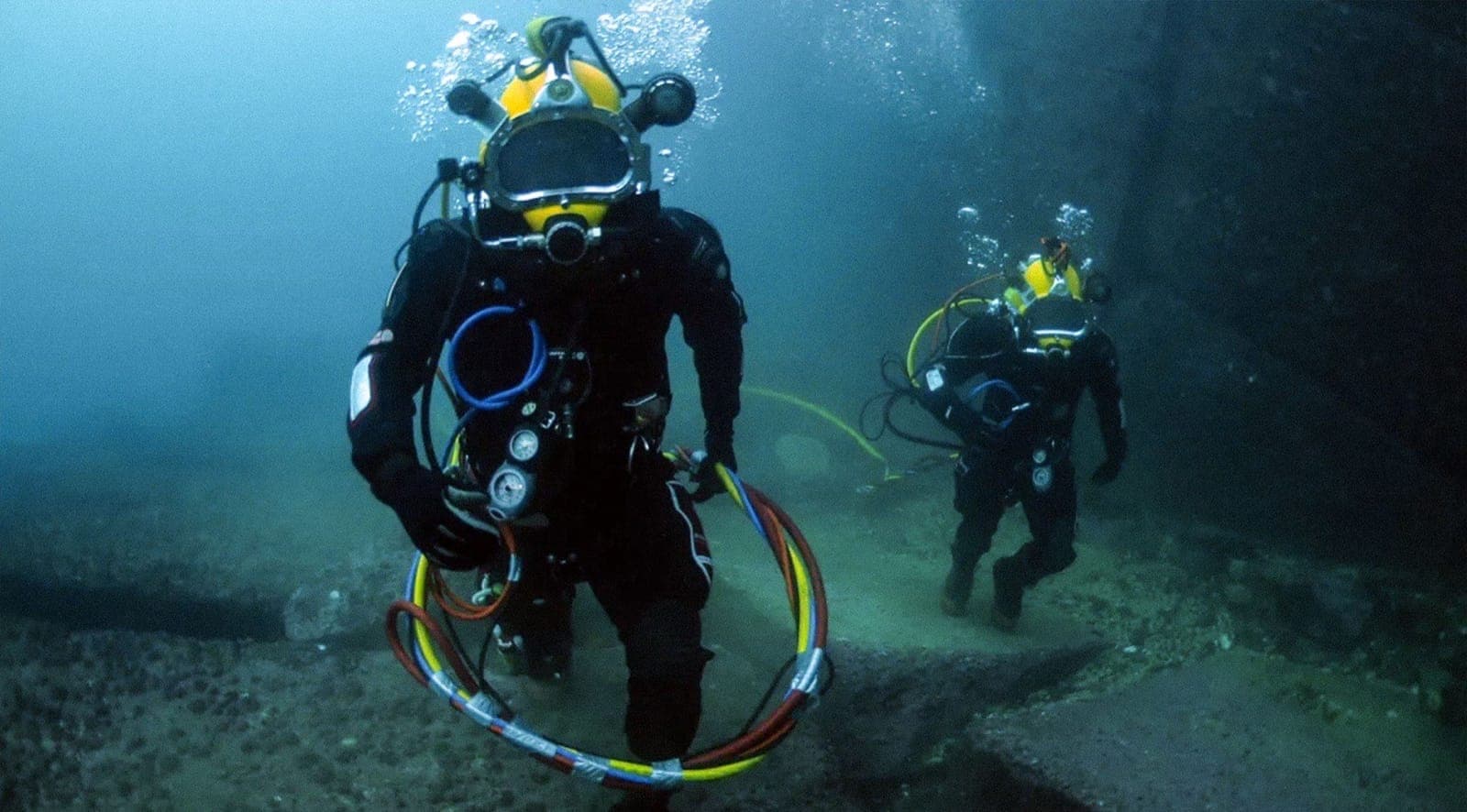
Commercial diving is specialised underwater work: from inspections and diving operations beneath vessels to handling loads and tools in contaminated or zero-visibility water. It is a trade that demands craftsmanship, a strong safety mindset and thorough, accredited training. Anyone who sets out to become a commercial diver is choosing not a hobby but a profession — with applications across the civil sector, within the fire and police services and, with the right qualifications, all the way through to international offshore work.
Since 2007, BC-opleidingen has been a professional diving training centre for civil commercial divers, located on the waterfront in Enkhuizen. Our instructors are working commercial divers who bring their practical experience straight into the training. We offer a complete learning pathway, from the Scuba scopes A9, A15 and A30 through to the heavier SSE categories B30, B50R and B50, supported by our own facilities such as the dive tower, dive pit, decompression chamber and training vessels. Our programmes are built in line with the civil diving registration system and lead to registration through the NDC-RI.
What does a commercial diver do?
Commercial divers work across a wide range of conditions and sectors. The training covers a number of types of diving operations and working methods, including the following.
Inspection and maintenance
Inspecting, searching and working underwater with the associated reporting — including diving operations on and beneath vessels.
Diving in contaminated water
Working safely and responsibly in zero-visibility and contaminated conditions, using the appropriate procedures and equipment.
Handling loads
Ropework, hitches and knots, lifting and securing gear: safely moving and securing loads underwater.
Underwater tools
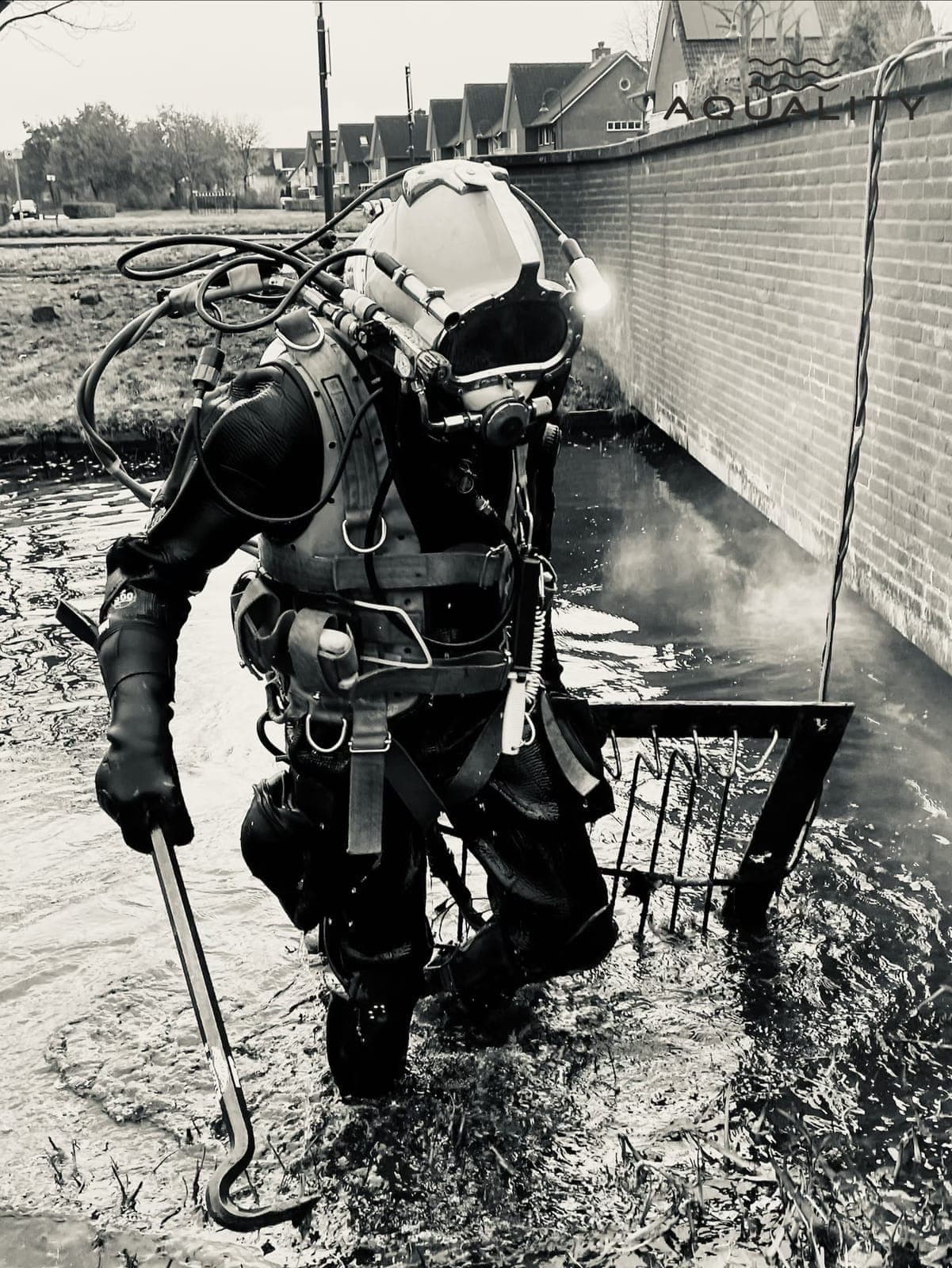
Working with tools such as underwater welding, the airlift, the high-pressure water jet and hydraulic equipment.
Fire and police diving
Sector-specific training for emergency services, delivered by specialist instructors and using equipment such as the water-incident response vehicle.
International and offshore assignments
With additional qualifications such as the Diver Medic Technician (DMT), BC-opleidingen is IMCA-recognised for international, offshore diving work.
Why choose BC-opleidingen
Our strength lies in our own facilities, accredited registration and instructors who work in the trade themselves.
Instructors from the field
Our instructors are working commercial divers. They bring current, hands-on experience and trade knowledge straight into the training.
Our own dive tower
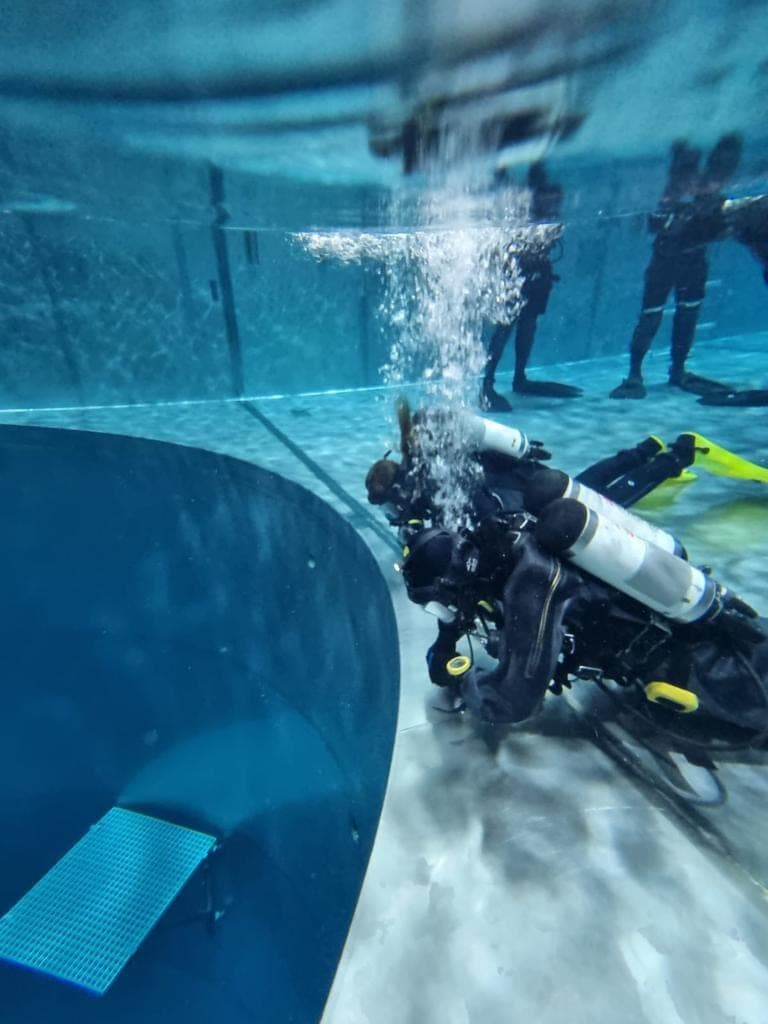
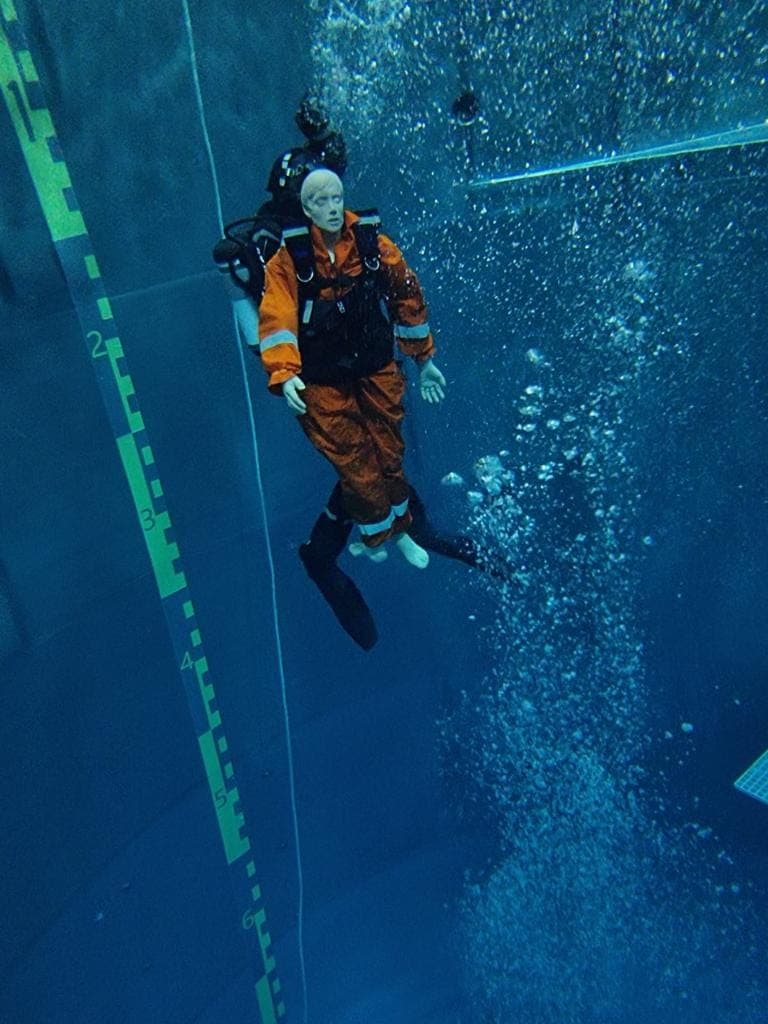
Three connected indoor pools with a 9-metre basin and a 5-metre platform, fitted with 22 mounted cameras for targeted instruction and assessment.
Dive pit with adjustable floor
Our outdoor location offers adjustable depths of 0, 9, 15 and 21 metres, a LARS system, hot-water suits and professional tooling.
Accredited and registered
For its commercial diving programmes, BC-opleidingen is recognised by the NDC-RI and is ISO 9001:2015 certified. The quality of the training is further safeguarded by independent bodies such as Hobéon-SKO.
IMCA-recognised training provider
As an IMCA member and IMCA-recognised training provider, we deliver programmes including the Diver Medic Technician, aimed at international and offshore assignments.
Professional diving systems
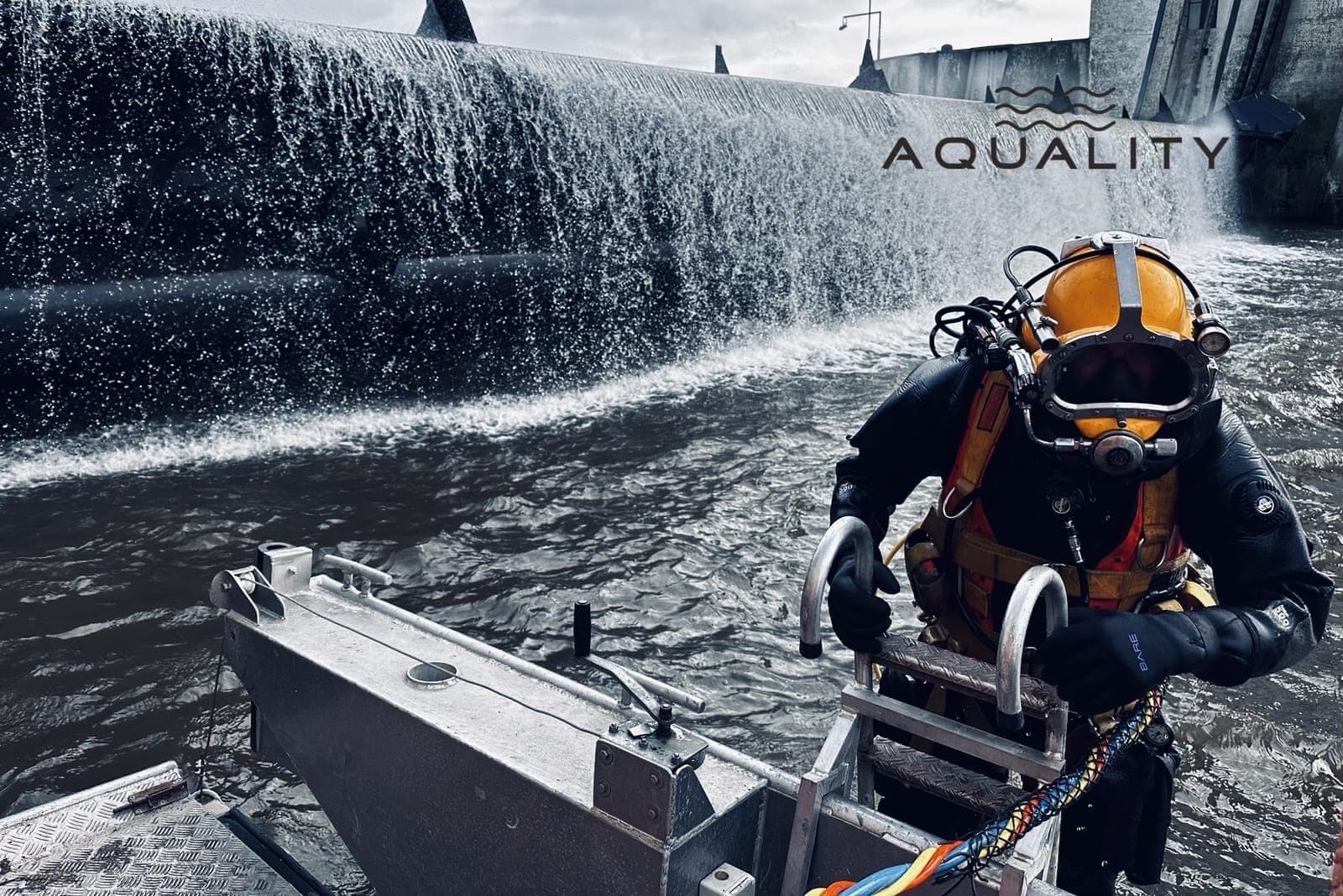
Working with professional equipment, including Interspiro Scuba systems and Kirby Morgan band masks and helmets for SSE diving.
Scuba or SSE: which scope is right for you?
Civil diving work is divided into scopes based on equipment and maximum depth. Scuba stands for Self-Contained Underwater Breathing Apparatus, and SSE for Surface Supplied Equipment. Which category you need depends on the work you want to do.
Scuba scopes: A9, A15 and A30
With Scuba, the diver carries their own breathing air. A9 gives access to work down to 9 metres and is often sufficient for tasks such as aquarium maintenance or work in indoor pools. A15 extends this to inspection and maintenance work down to 15 metres. A30 reaches 30 metres and is the most versatile Scuba category for civil diving work. Check the price and duration for each category on the page of the relevant scope.
SSE scopes: B30, B50R and B50
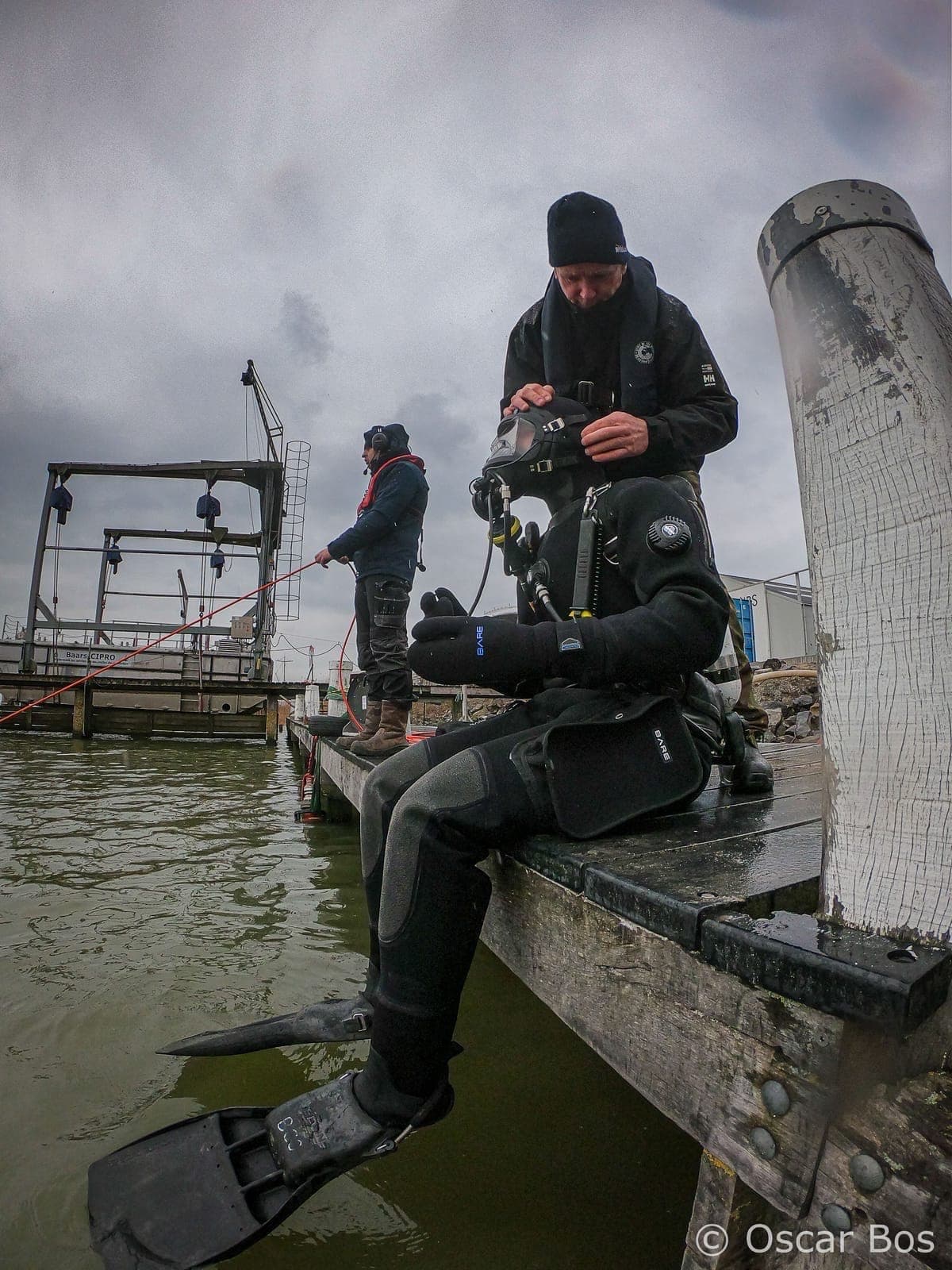
With SSE, the diver is supplied with air from the surface via an umbilical, which makes heavier and more demanding work possible. B30 (down to 30 metres) is the minimum requirement for working with powered underwater tools in the civil sector. B50R covers work down to 50 metres without a wet bell, and B50 (down to 50 metres) is the most demanding civil diving category we train. For SSE diving in open water, we have the training vessel 'Diva' and the pontoon 'Serva-1'. Check the price and duration on the page of the relevant scope; adjusted costs apply when progressing from a lower category.
Choose your scope
How the training works
Every commercial diving programme combines online self-study with intensive practical training in Enkhuizen, followed by an independent examination and registration.
Online self-study
You learn through our digital learning environment, accessible 24/7, with direct mentor contact, interaction with fellow students and the integrated MemoTrainer app to help you retain what you learn.
Practical training in Enkhuizen
At our diving centre you first learn to dive safely and responsibly — self-rescue and buddy rescue in zero visibility, plus emergency procedures — and then move on to the real underwater work.
Examination and assessment of competence
The examination and assessment of competence are conducted by an independent examination body, such as Hobéon-SKO. Examination fees are charged separately.
Civil diving registration
Once you have passed the examination, the NDC-RI registers you in the Register Civiele Duikarbeid, in line with Dutch legislation and regulations.
Entry requirements
The following requirements apply to all scopes, from A9 through to B50.
- A minimum age of 18.
- A mature, professional attitude to work.
- A valid diving medical examination by a certified Doctor B, valid for the entire duration of the training.
- Diving kit (drysuit, undersuit and liner) — bring your own or hire/buy it from BC-opleidingen; owning your own is not required.
Frequently asked questions
Do I need prior knowledge or diving experience to start?
There are fixed entry requirements: you must be at least 18, have a mature attitude to work, hold a valid diving medical examination by a certified Doctor B and have suitable diving kit (your own or hired from BC-opleidingen). The training builds your skills step by step, from safe diving through to the real underwater work.
Which scope should I choose?
That depends on the work you want to do and the depth at which you will be working. For lighter work at limited depth, a Scuba scope (A9, A15 or A30) is often sufficient. If you want to work with powered underwater tools, you will need a minimum of B30 (SSE). Do feel free to contact us for advice on the right category.
How long does the training take?
The A9 programme comprises around 40 hours of online self-study and approximately two weeks of practical training. The duration of the other scopes depends on the category and on any progression from a lower scope; please contact us for the details.
What does a commercial diving programme cost?
Costs vary per scope. Check the current price on the specific page of the scope you want to take, or contact us. Examination fees are set by the independent examination body and are always charged separately.
Can this training enable me to work internationally or offshore?
BC-opleidingen is an IMCA member and IMCA-recognised as a training provider, including for the Diver Medic Technician (DMT), which is aimed at international, offshore diving assignments. We would be glad to discuss exactly which qualifications you need.
How do I get registered after the training?
Once you have successfully completed the examination and assessment of competence at an independent examination body, you are registered by the NDC-RI in the Register Civiele Duikarbeid, in line with Dutch legislation and regulations for civil diving work.
Looking for pricing or more information? We tailor this training to your dive team and situation. Contact us via info@bc-opleidingen.nl or +31 (0) 228 722 420 — you'll quickly receive a quote and all the information.