
Detection of Explosive Remnants of War (OOO)
Skills-broadening day with 15-metre dive
During operational deployment there is a chance of unexpectedly encountering explosives. Hand grenades, artillery munitions, air-dropped munitions and mines are found regularly in the Netherlands — each with its own specific hazards. This skills-broadening day teaches fire-service divers how to deal with explosive remnants of war (OOO).
About this training
During operational deployment there is a chance of unexpectedly encountering explosives. Hand grenades, artillery munitions, air-dropped munitions and mines are found regularly in the Netherlands — each with its own specific hazards.
This skills-broadening day teaches fire-service divers how to deal with explosive remnants of war (OOO). The day combines theoretical knowledge of the various forms of ordnance and the relevant legislation and regulations with a practical dive centred on recognition and the correct search method.
The training in pictures
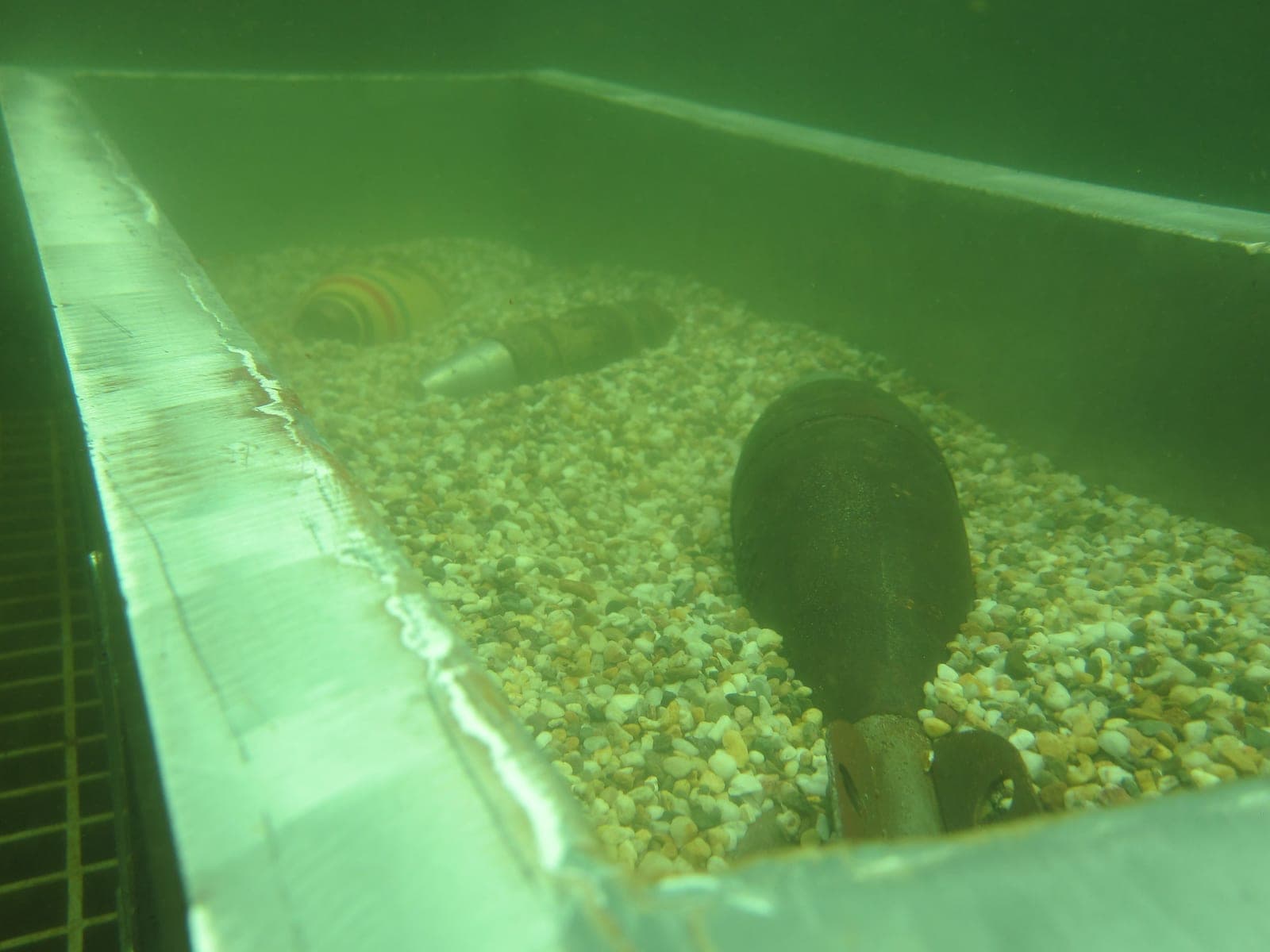
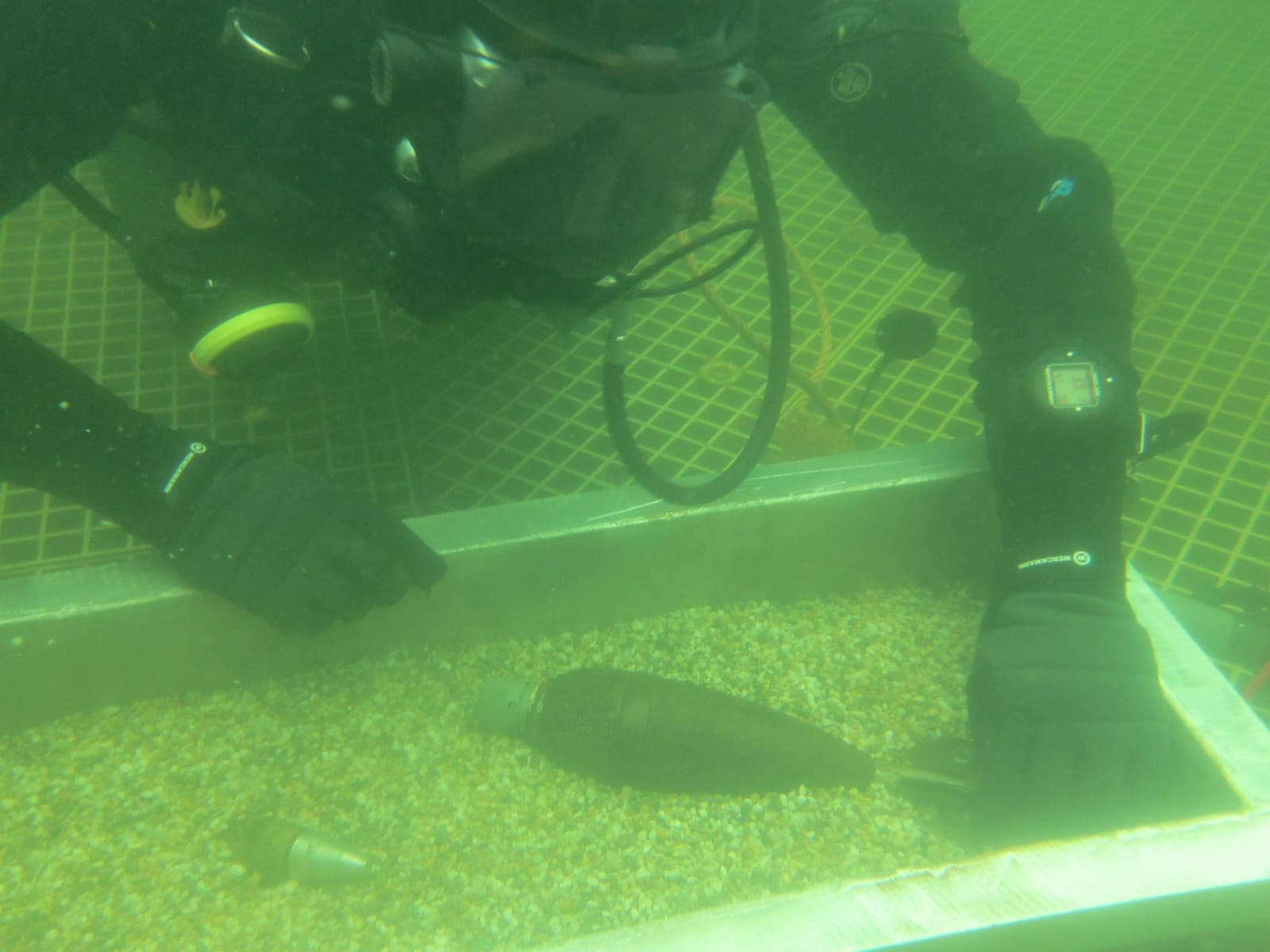
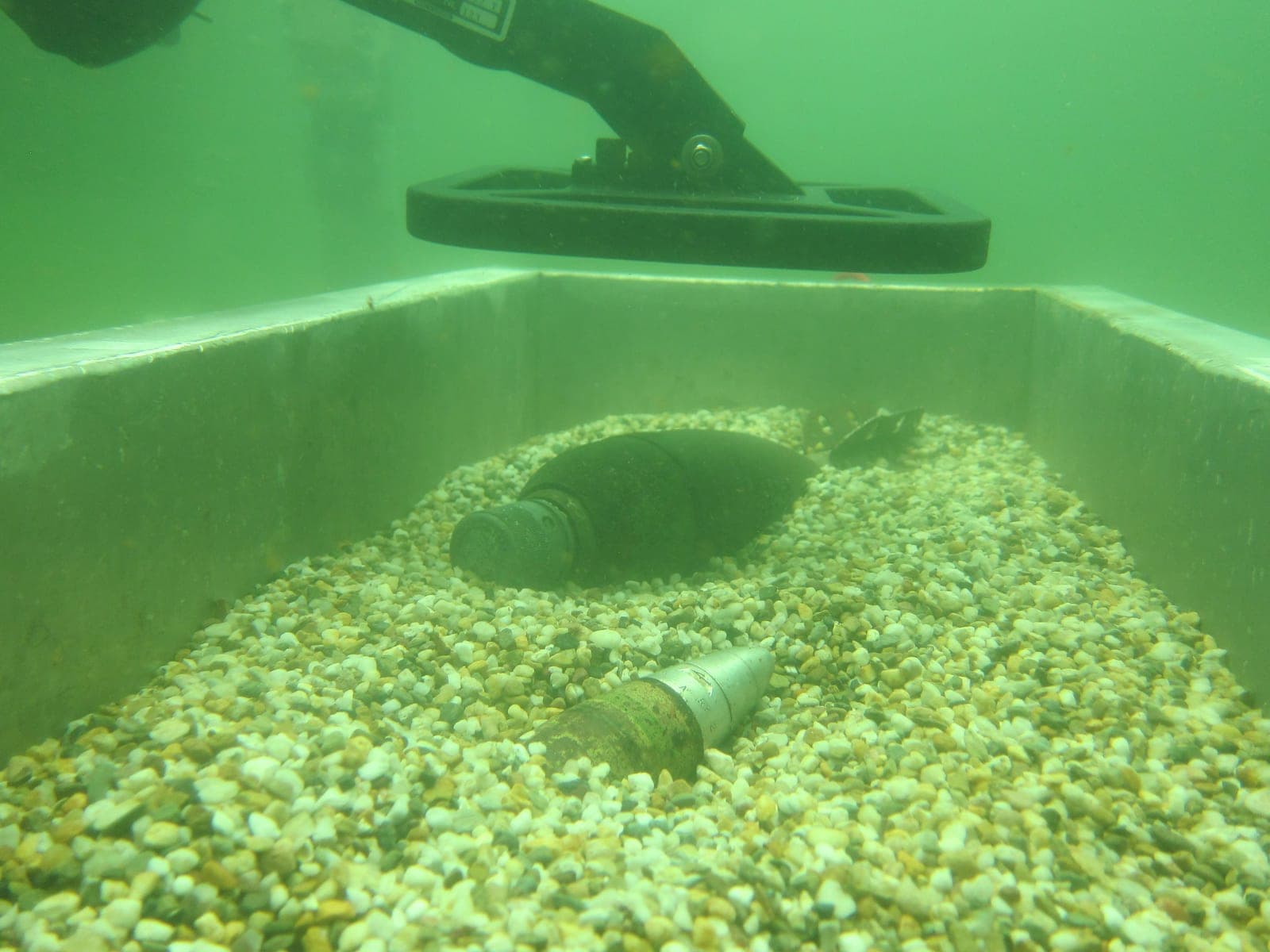
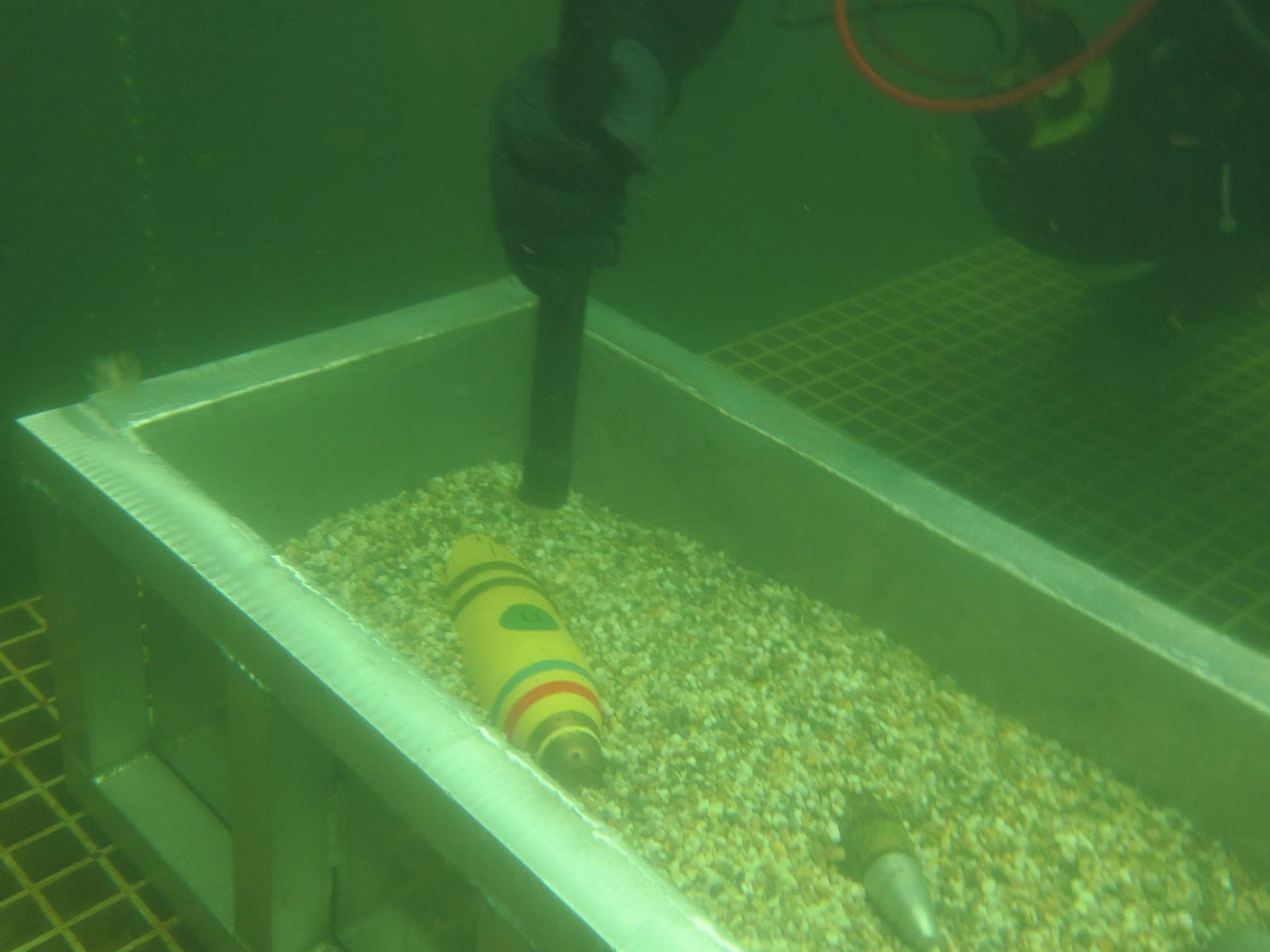
In a controlled test set-up, divers recognise and locate (practice) munitions on and in the waterbed.
What the day delivers
On completing this skills-broadening day, the fire-service diver has the practical knowledge and skills to deal safely and competently with a find of explosive remnants of war on or in the waterbed.
Forms of ordnance
Insight into the various forms in which explosives appear and the basic operation of fuzes.
Legislation and regulations
Knowledge of the relevant legislation and regulations surrounding OOO.
Primary recognition
Encountering and recognising ordnance in practice: munition or not.
Underwater search method
A search method in which both explosive and non-explosive objects are encountered.
Key features
Suited to the fire-service diver
The fire-service diver does not dig into the bottom; the OOO lie in or on the waterbed, where manual contact is made without digging and without detection. This aligns the training with the realistic operational situation.
Two objectives in one day
The practical dive at 14 metres also fulfils training card OD26 – Deep Diving (descent and ascent rate 15 m, IKB 213 & 214), efficiently contributing to maintaining professional competence for diving between 10 and 20 metres.
Practical information
Target group: fire-service divers. Group size: minimum of 6 and maximum of 12 candidates. Price on request.
Course information
On request
Interested in this skills-broadening day?
Date on request
Contact the Centrum voor Beroepsduiken to discuss the possibilities or to schedule a day.
Get in touchLooking for pricing or more information? We tailor this training to your dive team and situation. Contact us via info@bc-opleidingen.nl or +31 (0) 228 722 420 — you'll quickly receive a quote and all the information.