Volume and weight determination of anodesValidate your inspection method
Determine the volume and weight of anodes through photogrammetry — performed by a diver or entirely without a diver using an ROV or drone — and demonstrate objectively that your inspection method is sound.
The right moment to replace, reliably predicted
Anodes protect civil structures, quays, locks and offshore installations against corrosion. Predicting the right “moment to replace” is crucial: too early is costly, too late is a risk.
The traditional method — lifting and weighing anodes — is expensive and entails occupational-safety and operational risks. The state of the art is determining volume and weight through photogrammetry, which can be performed by a diver or entirely without a diver using an ROV or drone. The latter fits within the “do not dive, unless” philosophy.
One set-up, two deployment methods
The same anode set-up in our validation facility is suitable for both approaches. You choose the method that suits your project and risk profile.
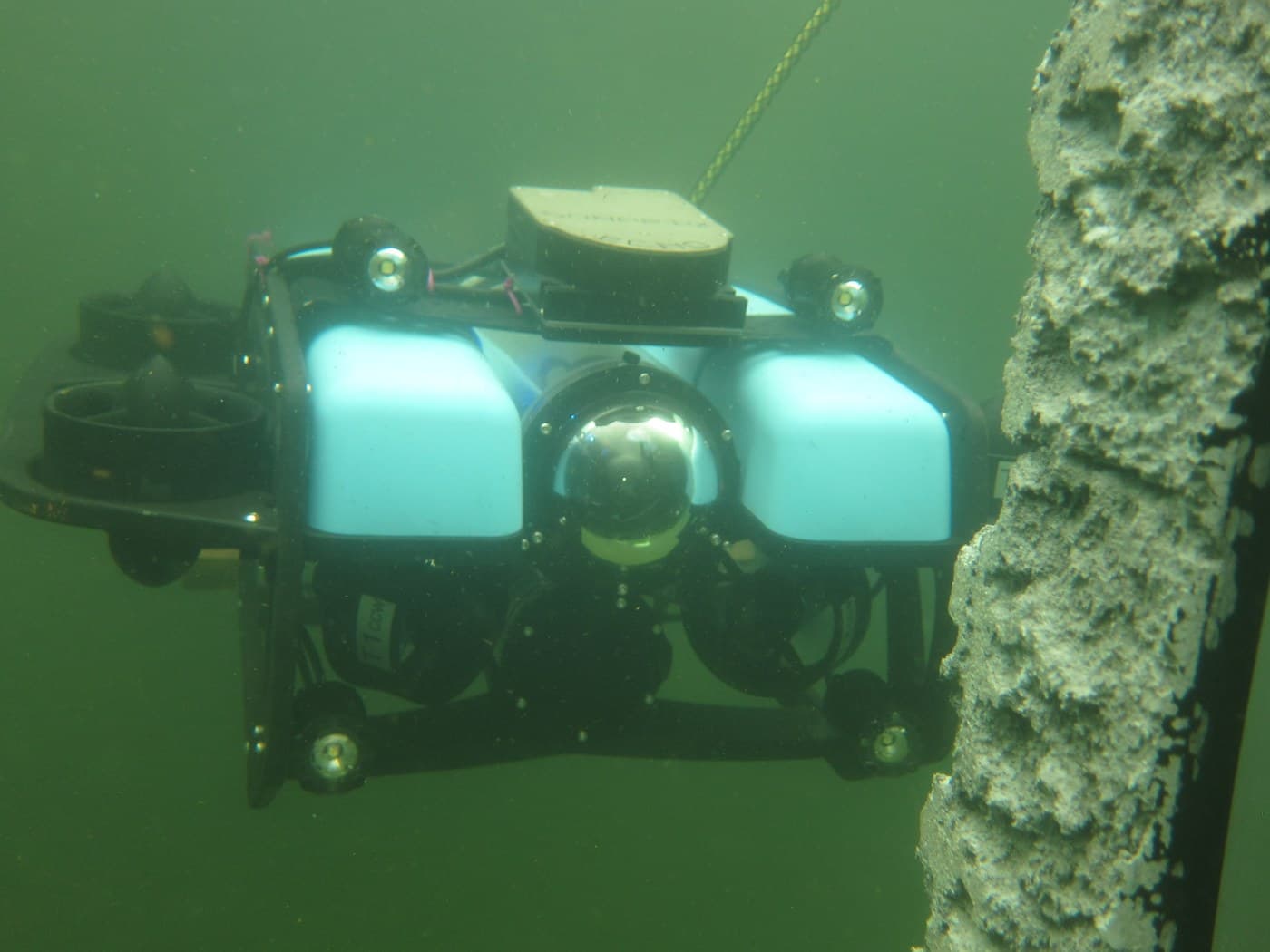
An ROV or drone captures the anode using photogrammetry.
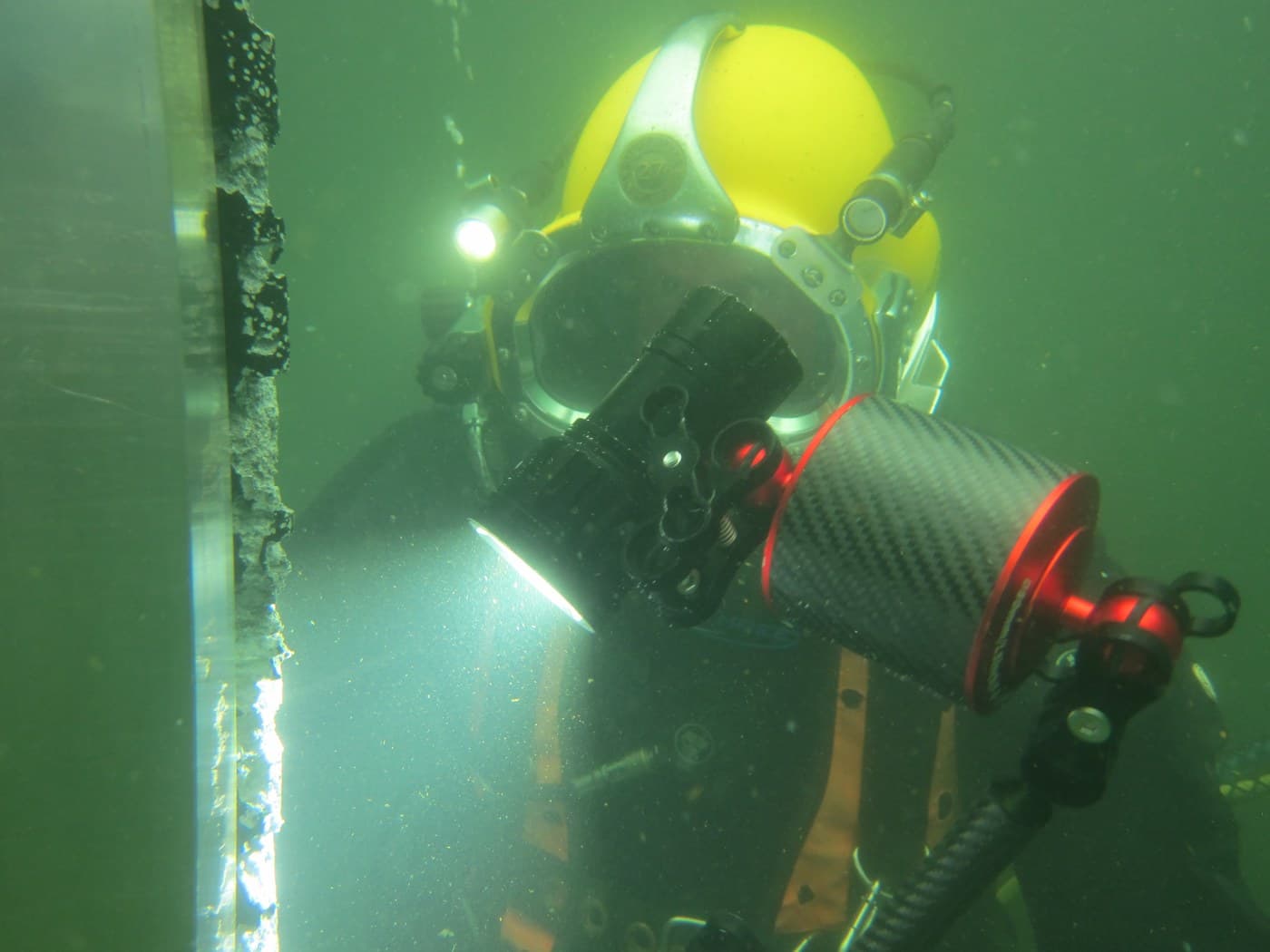
Capture of the anode with a camera rig.
Why validate?
The usefulness of an inspection result stands or falls with the reliability of the measurement method. By having your method or technique validated in advance in the BC-opleidingen validation facility, you demonstrate objectively that your results are accurate and reproducible. This qualifies you to carry out remaining-service-life inspections of anodes for the various asset owners.
Faster
Less downtime and deployment time on site.
Safer
Fewer diving and lifting operations and therefore a lower occupational-safety risk.
More accurate
An objective, reproducible prediction of the remaining service life.
For whom?
Asset owners
Owners of infrastructure with cathodic protection who want to reliably predict the replacement moment of anodes and wish to work with qualified providers.
Providers
Diving companies and ROV/drone operators who offer volume and weight determination and want their method validated in order to qualify for inspection assignments.
How a validation proceeds
- 1
Register
You register your method or technique and agree on the scope (free-hanging anode, or anode in a sheet-pile pocket).
- 2
Schedule
BC-opleidingen rents out the 21-metre pit with anode set-up and schedules the validation session.
- 3
Perform measurement
You carry out your measurement on the reference anode, with a diver or without a diver.
- 4
Reference determination
BC-opleidingen weighs the anode afterwards as an independent reference.
- 5
Validation report
You receive a validation report with which you qualify for inspection assignments.
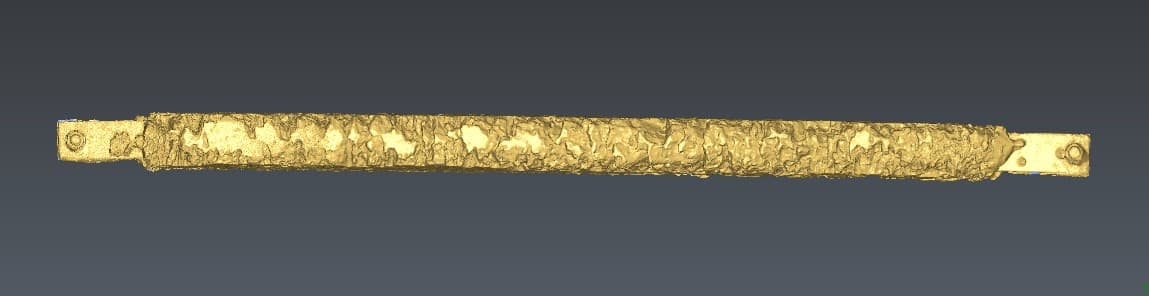
The result: a validated 3D model
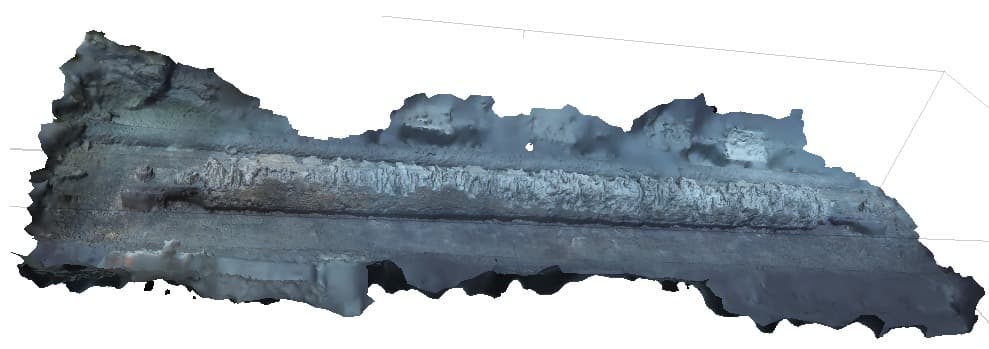
The photogrammetry capture yields an accurate 3D model of the anode, from which volume and weight are determined. BC-opleidingen validates this against the independent weighing.
Tell us what equipment is involved, and we'll send you a test setup and a tailored quote. Email info@bc-opleidingen.nl or call +31 (0) 228 722 420.