Rescue from a high quay
Bridging the height difference between quay and water
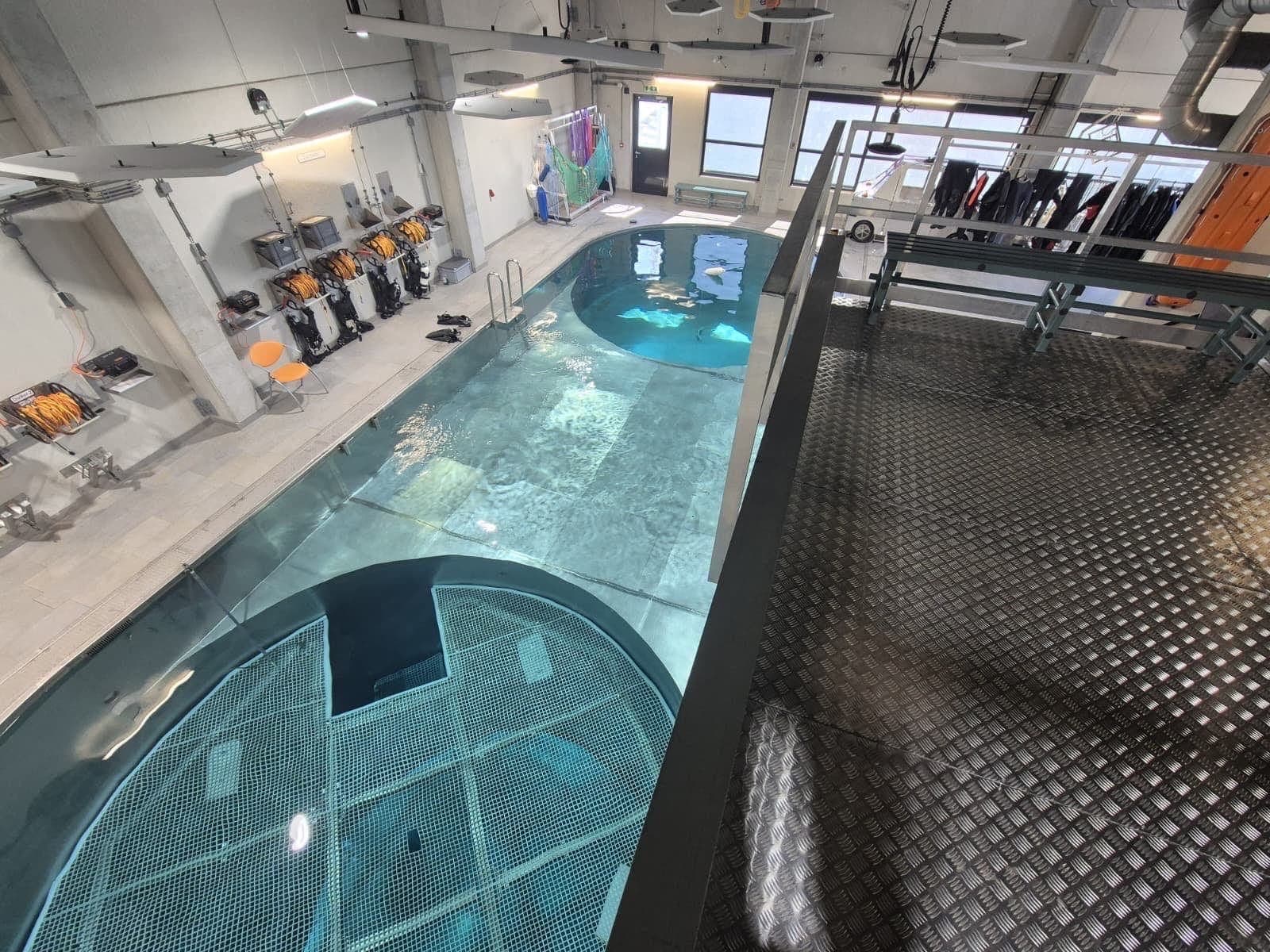
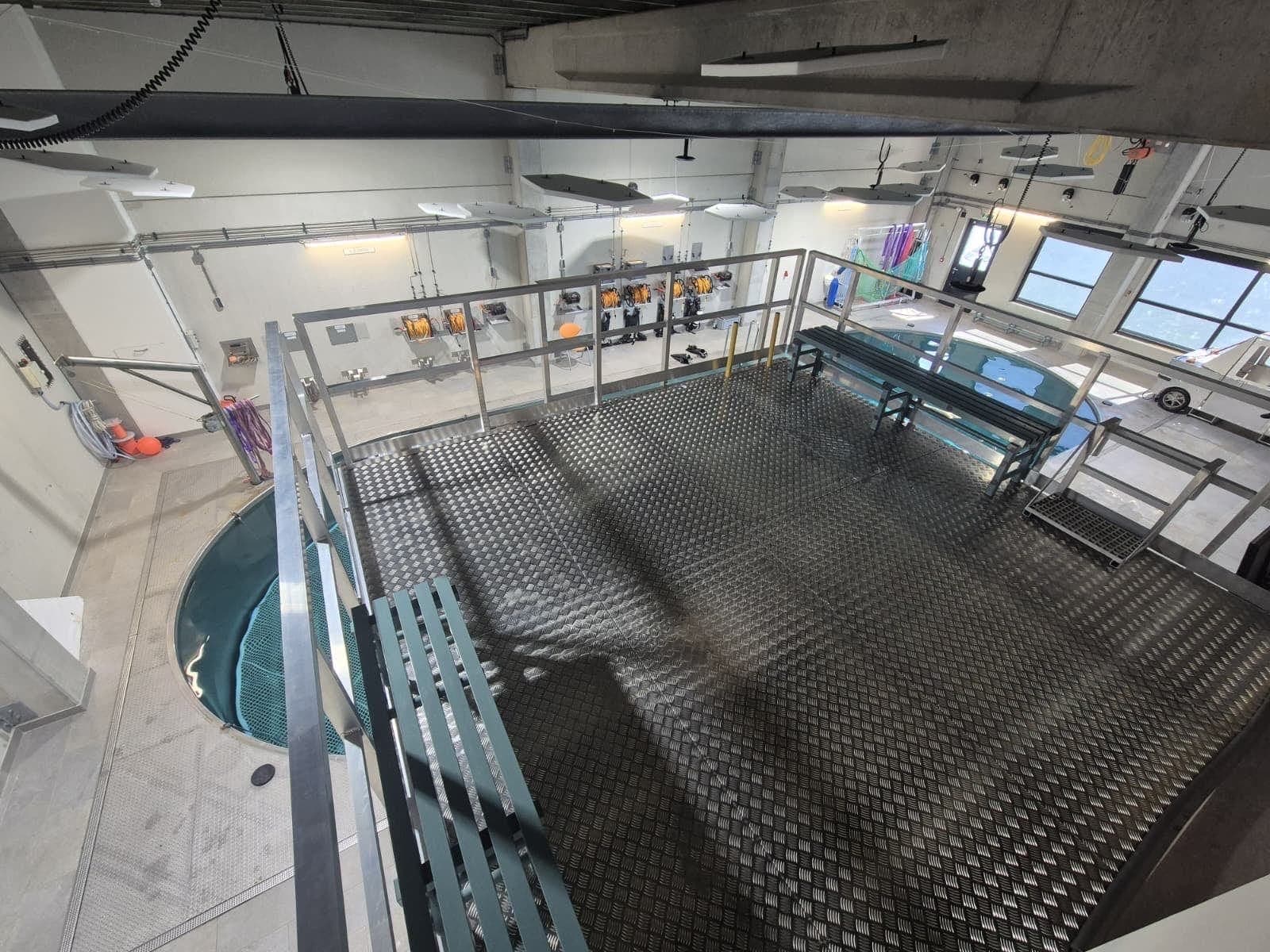
In the dive hall, a chequer-plate floor with a railing is installed above the entry area, simulating a high, vertical quay. This lets fire-service diving teams practise entering the water and recovering a casualty or diver in distress under controlled, repeatable conditions.
The training
Bridging a large height difference between quay and water is a demanding element of the operational rescue task. In the dive hall of the Centrum voor Beroepsduiken in Enkhuizen, a permanent set-up is available for this purpose: a chequer-plate floor with a railing that simulates a high, vertical quay. This allows teams to train this specific operation repeatably and under safe conditions.
Both the secured lowering of the rescue diver into the water and the recovery of a casualty across the height difference (IKB 217 – OD28A/B / IKB 219 – OD20) are addressed in the training. The emphasis lies on fall hazards, task allocation at the quay edge, and correct handover and follow-up after the rescue.
The set-up in pictures
The chequer-plate floor with railing above the entry area of the dive hall in Enkhuizen — the permanent simulation of a high, vertical quay.
What is covered
The training covers the complete chain of actions, from locating the casualty through to handover. Teams practise in their own composition, so that task allocation and communication are directly applicable in their own operational context.
Working safely at the quay edge
Fall hazards, edge protection and task allocation when working on a high, vertical quay — the foundation of a safe rescue operation.
Lowering the rescue diver into the water
Secured lowering of the rescue diver into the water from the quay, with attention to anchor points, line management and communication with the surface team.
Surface rescue and recovery (IKB 217 / IKB 219)
Surface rescue and recovery of a casualty or diver in distress across the height difference (IKB 217 – OD28A/B / IKB 219 – OD20).
Aftercare, handover and dive administration
Structured handover to the medical chain, aftercare for the rescue diver and correct processing of the dive administration.
Who this training is for
Fire-service diving teams
Specifically developed for diving teams that want to train bridging a large height difference between quay and water.
Controlled conditions
The permanent set-up in the dive hall offers a safe, repeatable training environment, regardless of season or weather conditions.
Realistic simulation
The chequer-plate floor with railing simulates a high, vertical quay and connects directly to operational reality.
Your own team composition
Training in your own team composition, so that task allocation and procedures are directly transferable to operational deployment.
Course information
On request
Enkhuizen
Schedule a training
Date on request
Would you like to schedule this training for your diving team? Contact the Centrum voor Beroepsduiken to discuss the possibilities and dates.
Get in touchLooking for pricing or more information? We tailor this training to your dive team and situation. Contact us via info@bc-opleidingen.nl or +31 (0) 228 722 420 — you'll quickly receive a quote and all the information.