
Rent a decompression chamber (DDC)
Ready-to-deploy deck decompression chambers for the diving industry
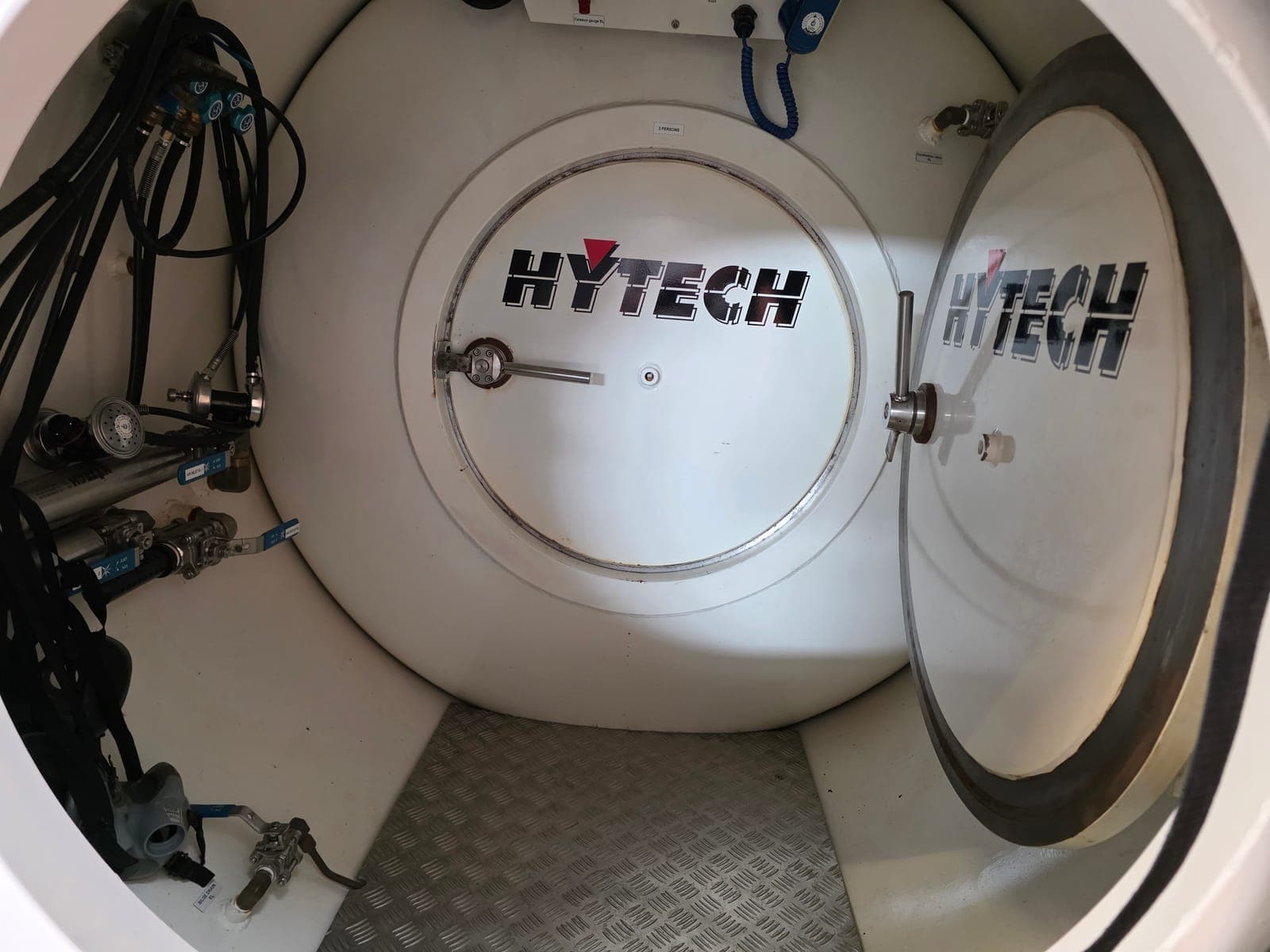
For surface-supplied diving we rent out complete, ready-to-deploy Deck Decompression Chambers. Both chambers are twin-lock with BIBS, suitable for surface decompression with oxygen (surface-ox), stand-by cover and emergencies. Whether you're supporting a planned diving operation or need a reliable emergency/stand-by chamber on site — we have the right chamber and will help you plan the mobilisation.
We have two chambers, each with its own strength
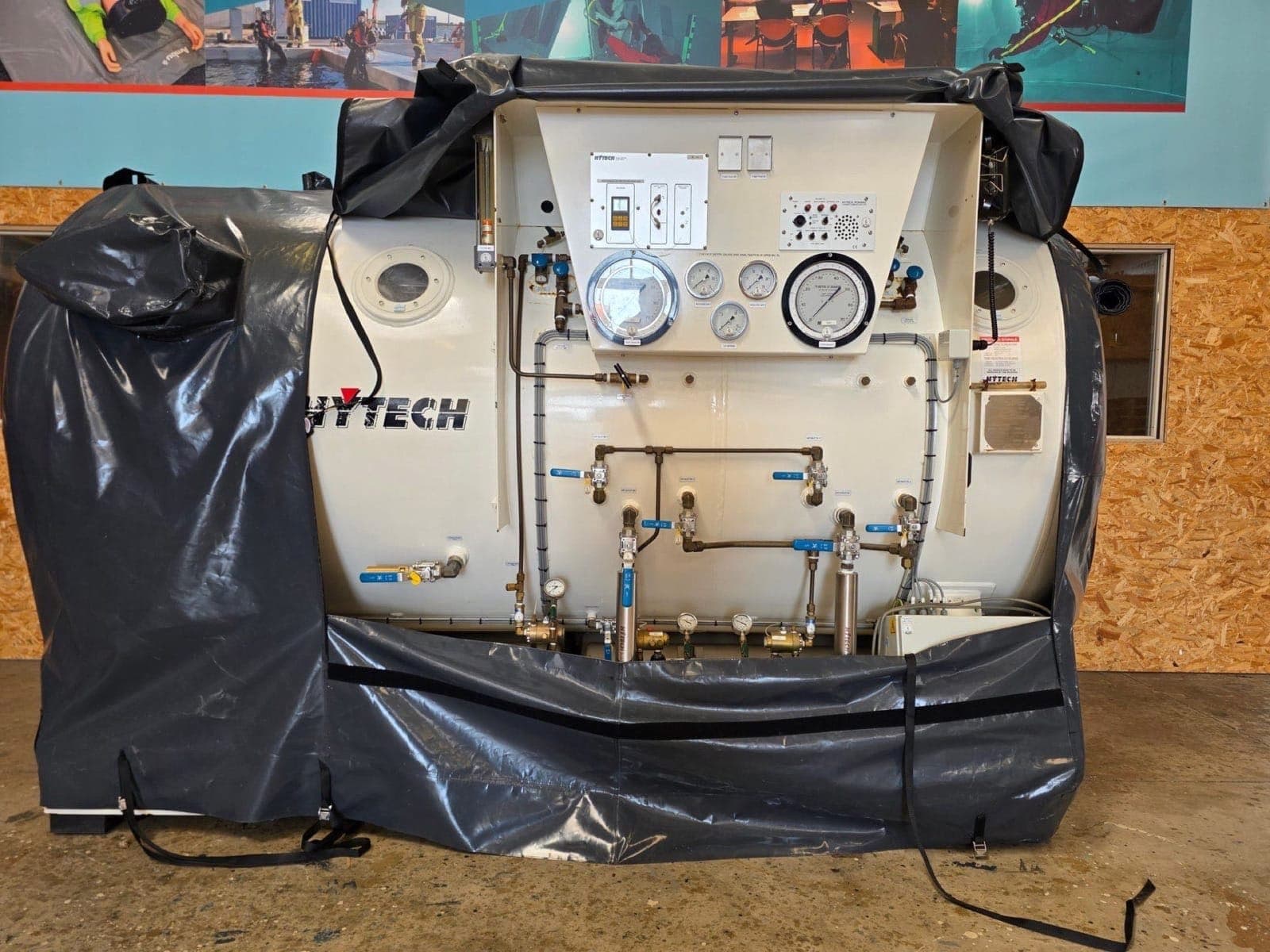
Decotank 1
Trailer-mounted · emergency & stand-by
This chamber is transported on a trailer, so it can be on site in no time. Its HP air supply (high pressure, 2 banks) makes it ideal as an emergency and stand-by decompression chamber: quick to mobilise and deployable anywhere. For planned surface-ox we recommend decotank 2.
- Trailer-mounted
- HP air supply (2 banks)
- Twin-lock with BIBS
- Emergency & stand-by
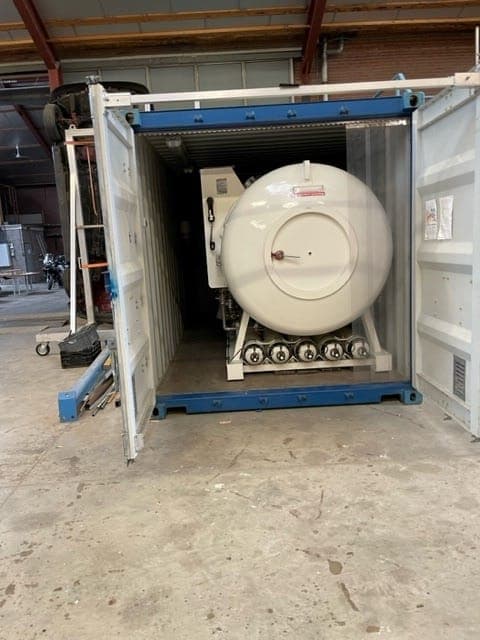
Decotank 2
In a 20ft container · planned surface-ox
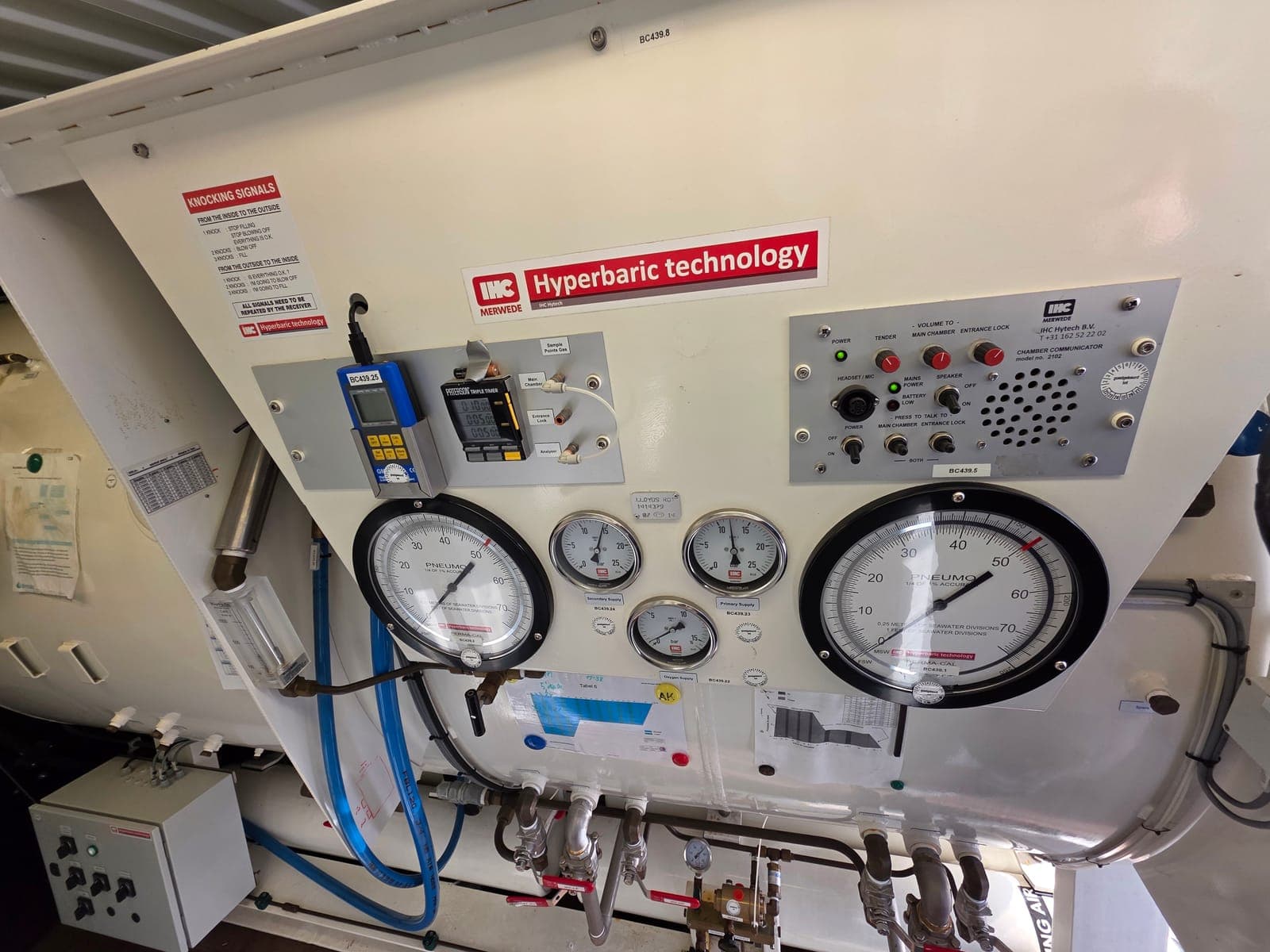
This chamber is housed in a 20ft container and is equipped with both an LP and an HP air supply (2 banks). That dual supply makes it perfectly suited to planned surface decompression with oxygen (surface-ox). Containerised, protected and ready for prolonged project deployment.
- In a 20ft container
- LP and HP air supply (2 banks)
- Twin-lock with BIBS
- Planned surface-ox
Not sure which chamber fits your operation? Get in touch — we'll advise based on your dive plan, location and duration.
Frequently asked questions
What is the difference between a decompression chamber, decompression tank and recompression chamber?
They're different names for the same equipment: a pressure chamber in which a diver is brought under controlled pressure and decompressed again, after or during a dive. At BC-opleidingen you rent a DDC (Deck Decompression Chamber) — also called a decompression tank or recompression chamber — built as twin-lock with BIBS.
What exactly is a DDC used for?
Three situations: planned surface decompression with oxygen (surface-ox) after a dive, stand-by cover while diving is underway, and as an emergency chamber in the event of a diving incident. Decotank 1's HP air supply makes it well suited to emergency and stand-by use; decotank 2's dual LP and HP supply makes it our first choice for planned surface-ox.
What do twin-lock and BIBS mean?
Twin-lock means the chamber has two lockable compartments, so a medic can enter or leave, for example, without disturbing the pressure the diver is under. BIBS is the built-in breathing system that lets the diver in the chamber breathe a separate gas, such as oxygen during surface-ox.
Which chamber suits my operation: decotank 1 or decotank 2?
It depends on your dive plan, location and deployment duration. Decotank 1 is trailer-mounted and can be on site in no time — ideal for emergency and stand-by. Decotank 2 is housed in a 20ft container and, with its dual air supply, better suited to planned surface-ox and prolonged deployment. Not sure? Get in touch and we'll advise.
How is the decompression chamber delivered and mobilised?
Decotank 1 is transported on a trailer, so it can be on site in no time. Decotank 2 is housed in a 20ft container: containerised, protected and ready for prolonged project deployment.